

Building a Yurt: Learning Structure, Culture and Collaboration
In the open area of the Qinghai Desert, the wind blows from the distant mountains, rolling up soft grains of sand. The students formed a circle, and under the guidance of a local Mongolian teacher, they began a practice that is closely linked to land, culture, and construction wisdom-building a yurt.
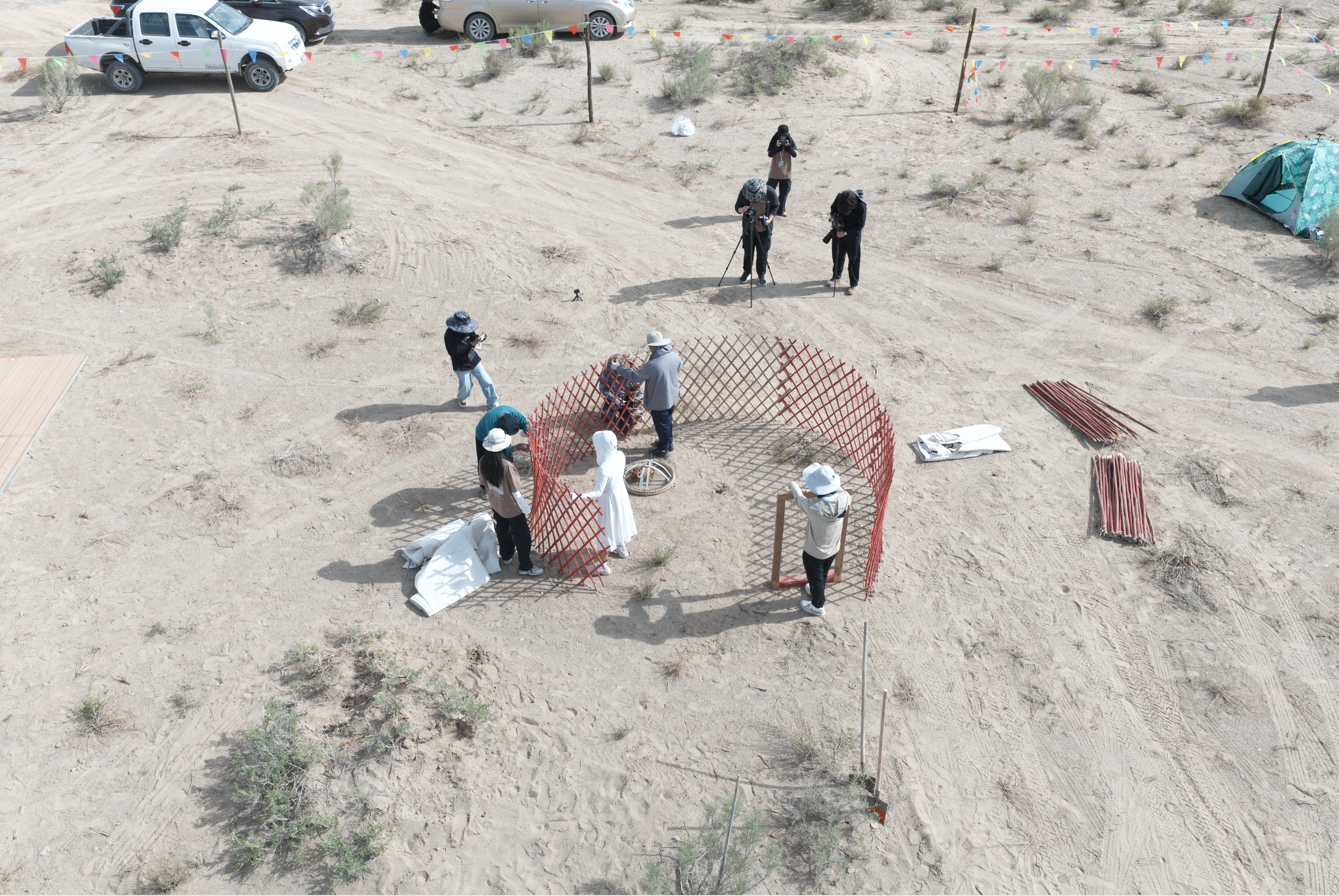
A yurt is not just a kind of residence, it condenses the wisdom accumulated by nomads in extreme environments for thousands of years. With foldable wall frames, radial wooden beams, and a central wheeled top ring, each structure responds to the needs of strong winds, temperature differences between day and night, and migration. When the students first touched these wooden structures stained with red paint, they could clearly feel a rhythm between craftsmanship and engineering.
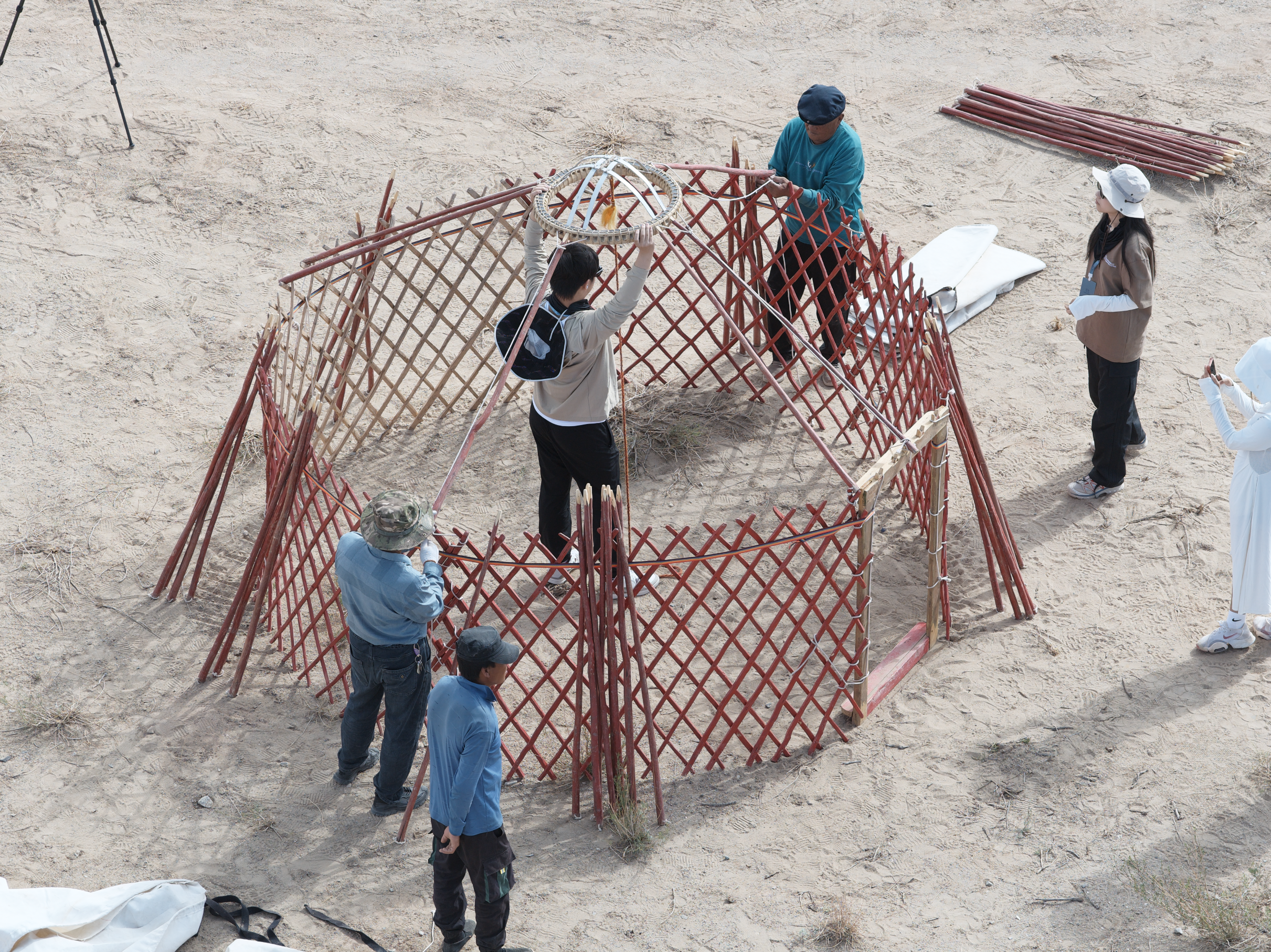
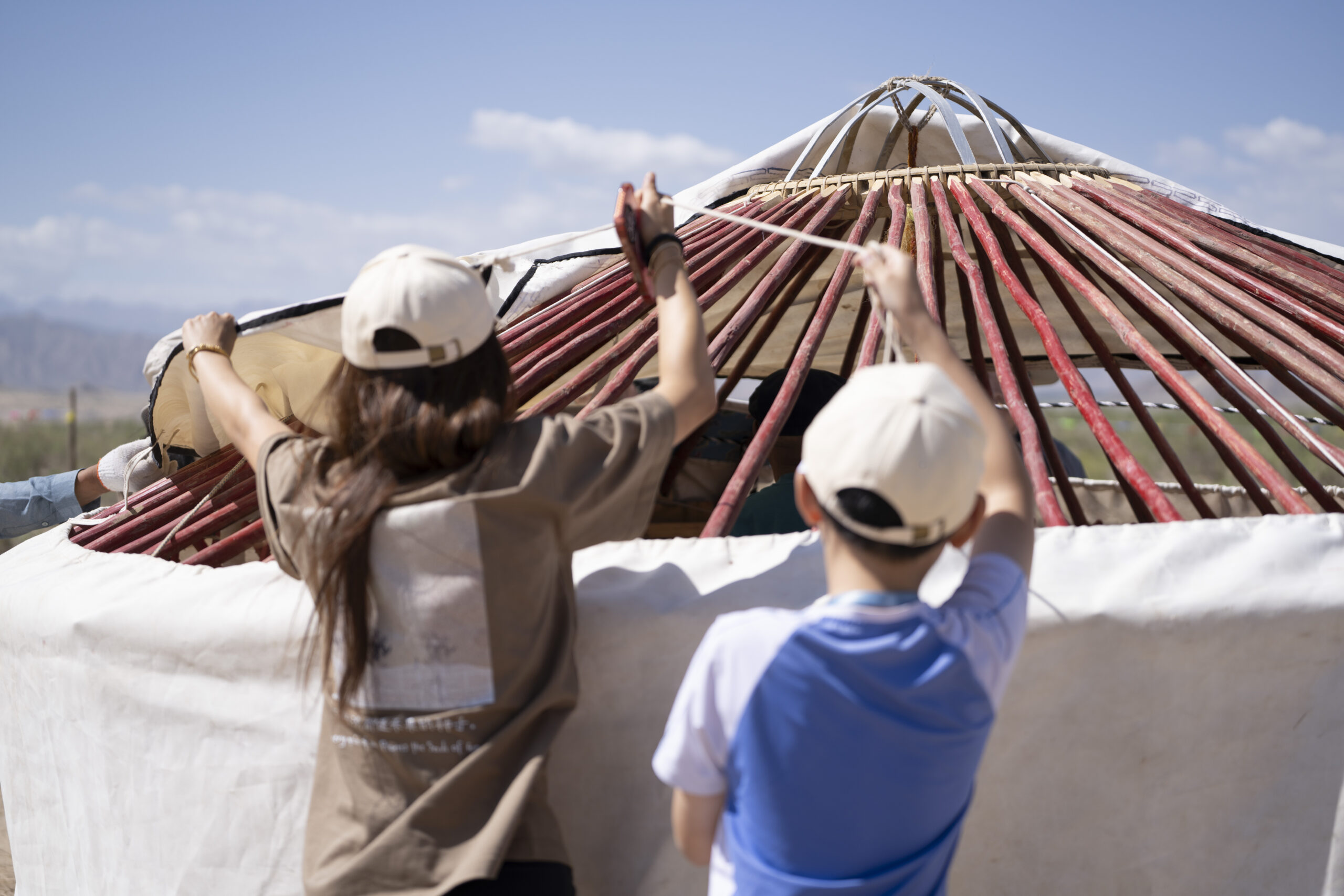
Under the guidance of the teacher's gestures, the wall frame unfolded a little bit into a circle.
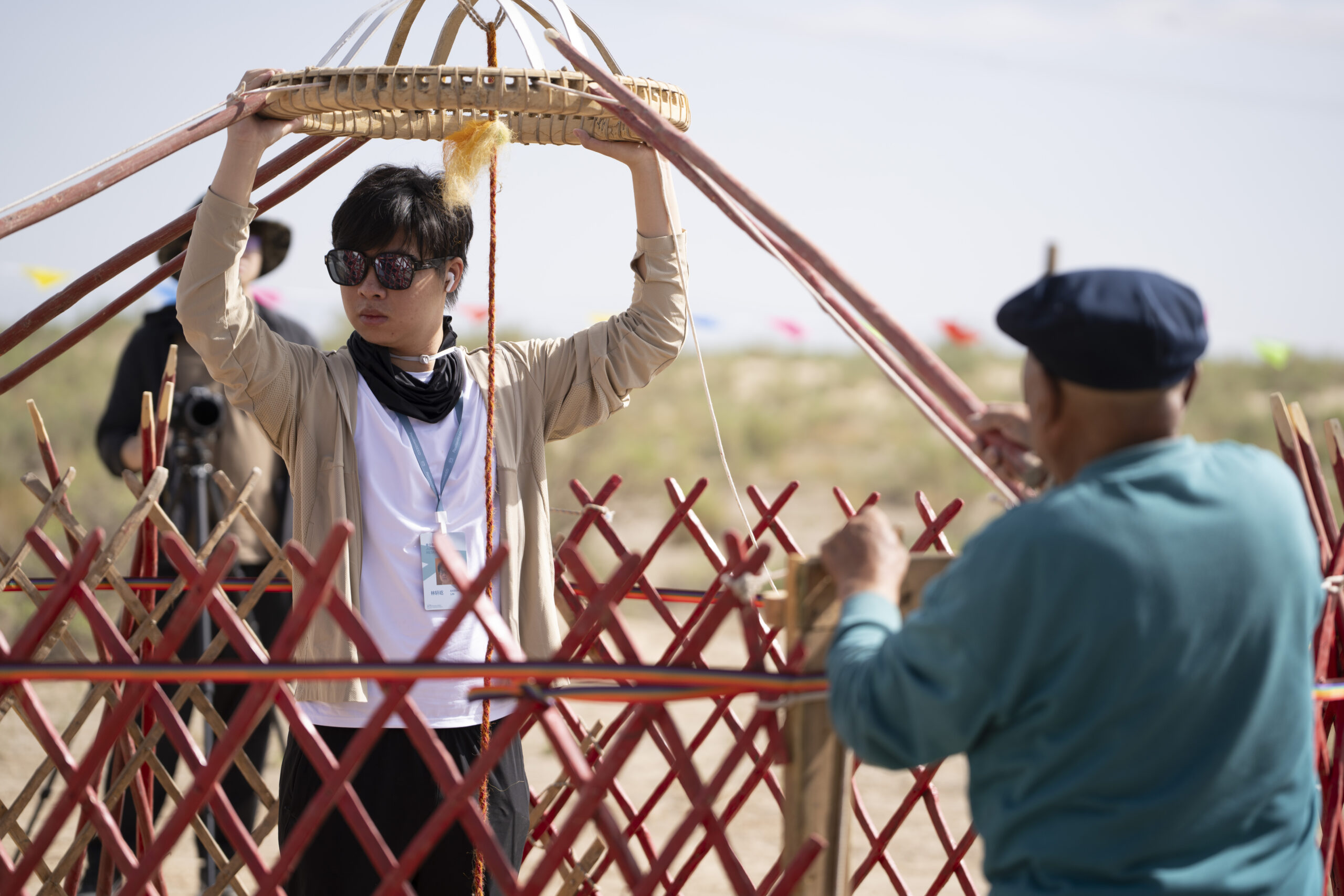
Some people held on to the structure, some fastened ropes, and some stood in the center to lift the calm "rims”, waiting for the wooden beams to be attached to them one by one. It is not easy to complete this action in the scorching sun, but every student is trying to pinpoint their position to ensure that the wooden structure can be evenly stressed. The moment the top ring was firmly held up, the soft sound of the wind blowing through the beams seemed to be an echo of collaboration.
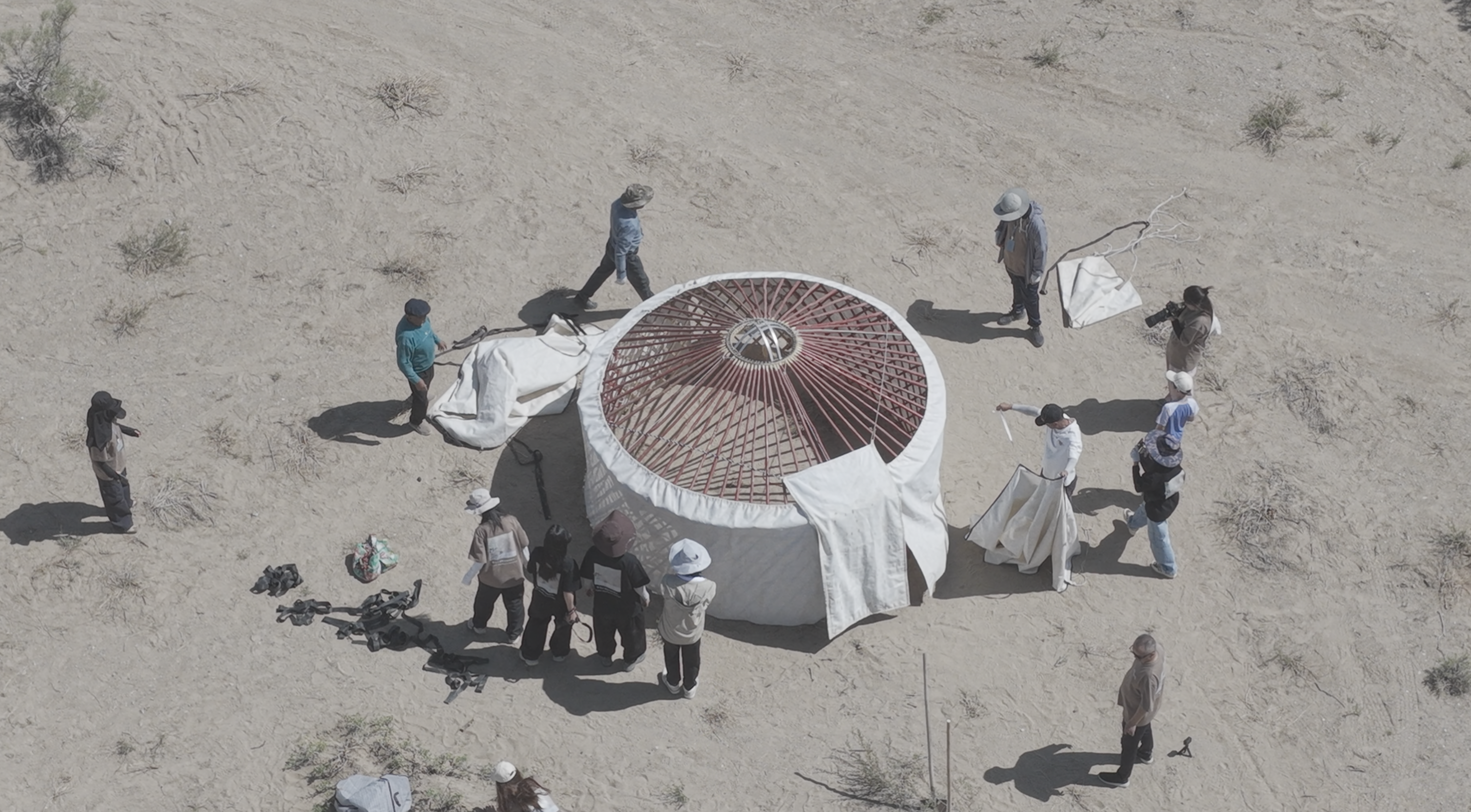
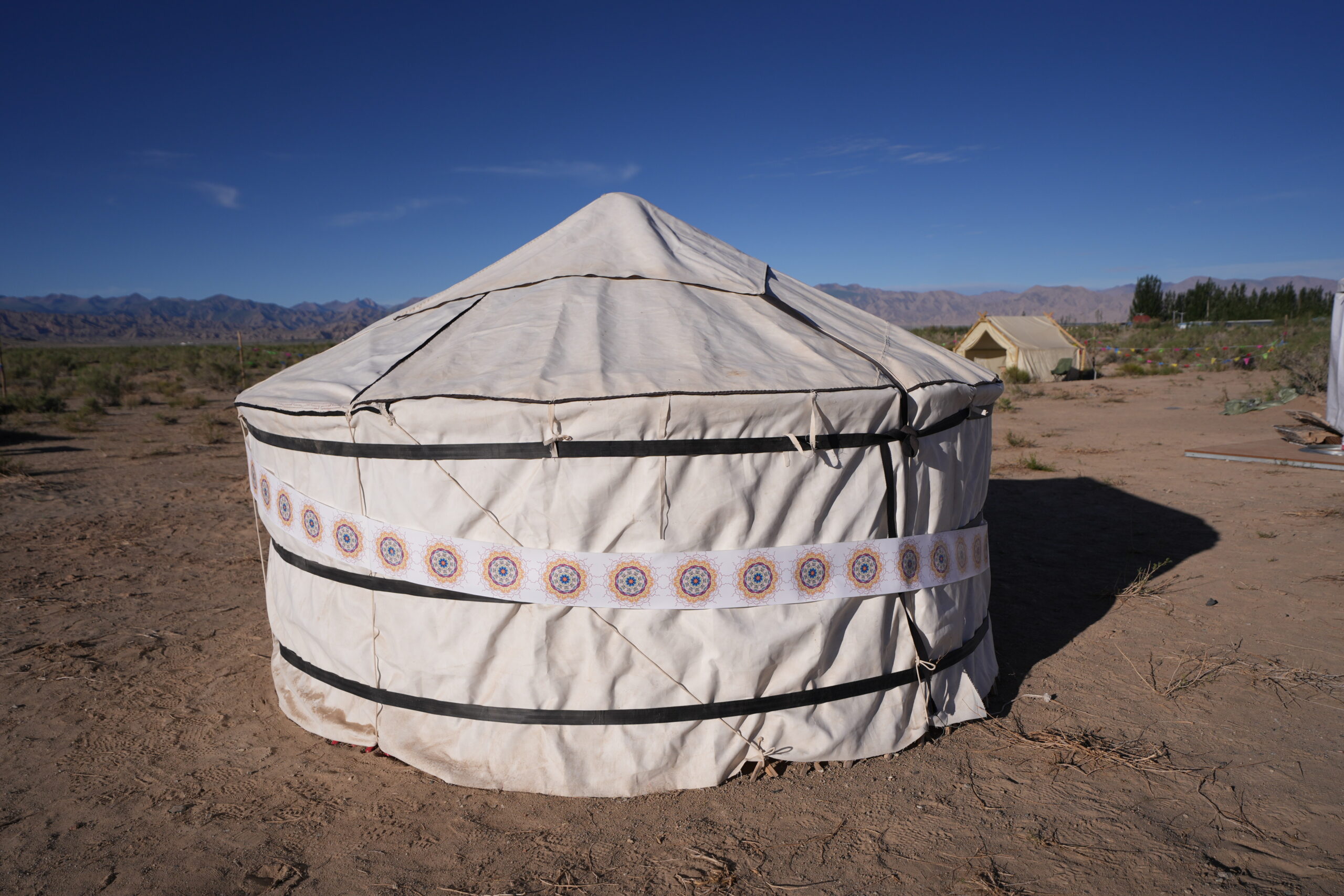
When the white outer felt was slowly laid on the skeleton, the outline of the yurt gradually appeared. The students surrounded them, tightening the edges of the cloth and fixing the straps, so that the soft fabric fits perfectly with the hard beams. In the picture taken by the drone from the air, the circular structure is like a white seed on the earth, symbolizing the moment it takes root in the desert.
The construction process is not only manual labor, but also an in-depth course on structural logic, traditional knowledge and ecological adaptation. The students realized that the reason why this kind of building can stand in a desert environment for a hundred years is because it understands the wind, adapts to the wind, and ultimately coexists with the wind.
When the yurt is fully formed, it stands on the golden sand, surrounded by rolling mountains and a vast sky. The students took a few steps back and looked at their works. It was hard not to feel a sense of accomplishment that came from the synchronization of the body and the land.
Every action here-lifting, tying ropes, pulling ropes, closing the cloth-records the oldest and most simple dialogue between man and nature.