


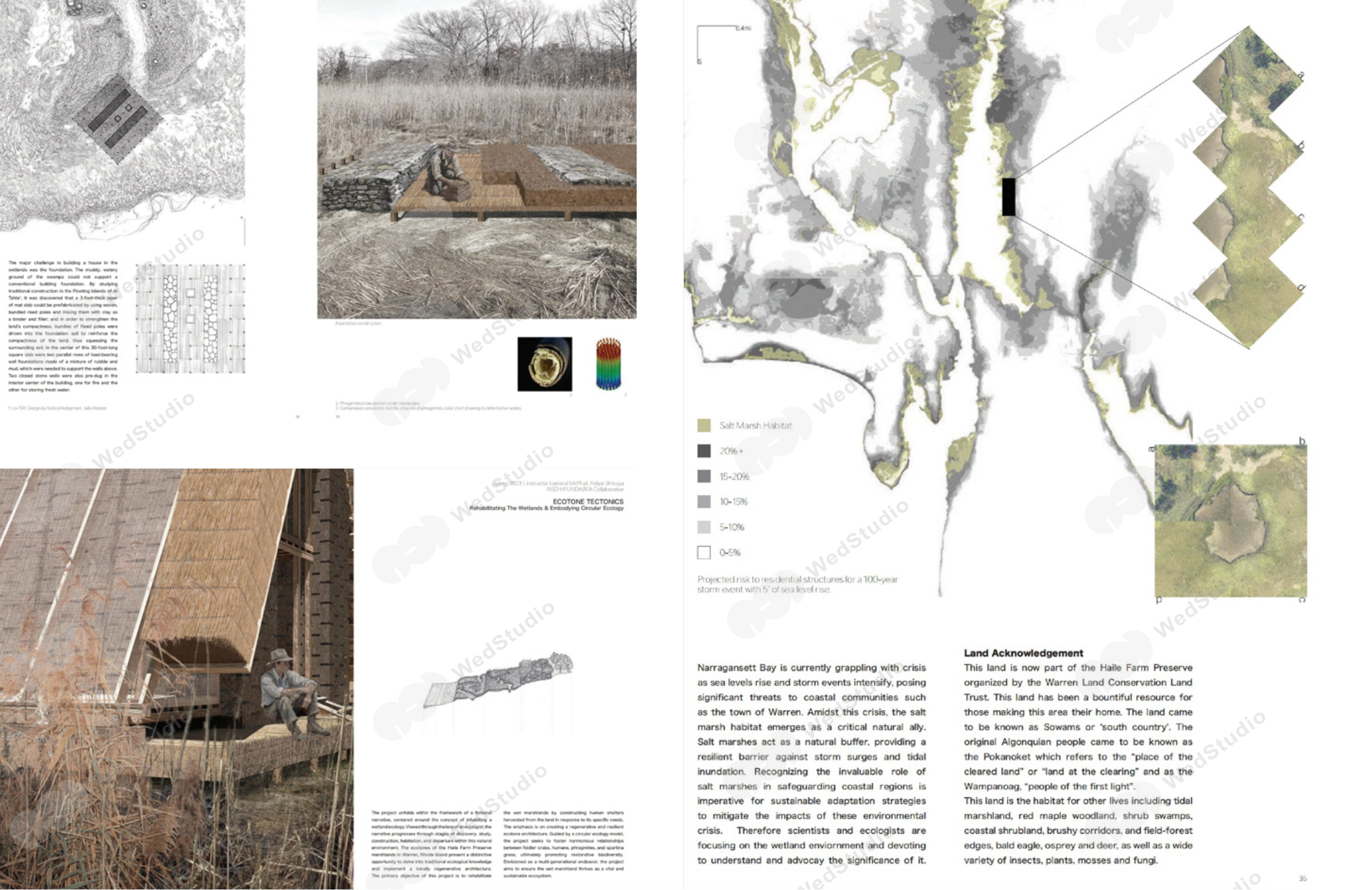
background
- He has an undergraduate background in the Rhode Island School of Design and a good foundation, but he has shortcomings in the overall planning of the Architecture portfolio. He joined in his sophomore year.
Admission results
- Harvard University (Harvard University)
- Columbia University (Columbia University)
- University of California, Berkeley [UC Berkeley] (University of California, Berkeley)
Highlights and growth
- Solid professional foundation: I have accumulated a wealth of practical experience in the field of art and design during my undergraduate years, but I need a higher level of “systematic integration”.
- Combing the design logic: through multiple rounds of brainstorming and in-depth research, he gradually constructed a clear architectural concept and composition structure.
- Both macro and micro: not only focus on the overall layout and functional planning of the space, but also pay attention to humanized details, demonstrating the thinking of social responsibility.
Tutor's comments
Liu's advantages are very obvious: he has an extremely keen intuition about beauty and materials, and sometimes he can clearly express the atmosphere of the space with just a few hand-painted pictures. However, I found that when he was working on projects at RISD, he often ‘had constant ideas’, but lacked a clear narrative context. In order to help him sprint to Harvard, Columbia, and Berkeley, we spent a lot of time brainstorming, and even visited some local community renovation projects together. He gradually realized that architecture is not just a shape, but a complex closely related to social groups, environmental protection concepts, and sustainable development. It is gratifying to see that he finally integrated artistic expression with urban issues, and combined the macro and micro aspects quite well. His works not only show deep design skills, but also'style stories’, so that judges from different backgrounds can feel his sincerity and depth of thinking.